From Camps to Municipalities: Kenya’s$943 Million Bet on Refugee IntegrationFaces Funding and Trust Tests
By Kasembeli Albert
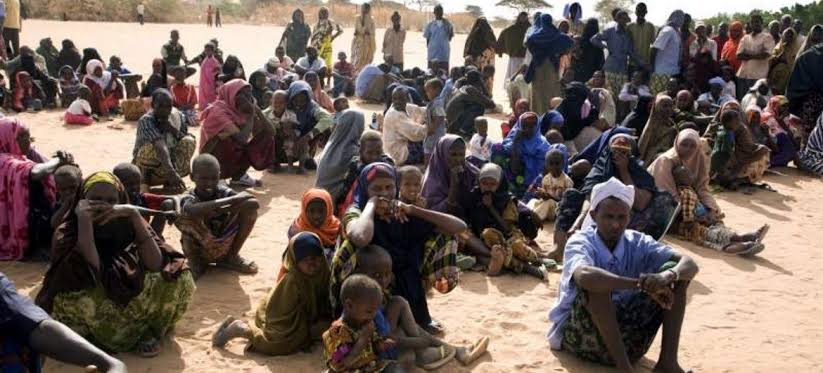
NAIROBI – For nearly three decades, Dadaab and Kakuma have been synonymous
with protracted displacement, the vast, dusty settlements where generations of Somali
and South Sudanese refugees have lived under humanitarian administration, their
economic potential largely confined by encampment policies.
The Shirika Plan, launched by President William Ruto in March 2025, seeks to
dismantle that architecture entirely, converting camps into county-administered
municipalities and integrating nearly a million refugees into Kenya’s national systems.
The ambition is matched by the scale of the challenge. Kenya hosts approximately
836,000 registered refugees and asylum seekers, the fifth-largest caseload in Africa.
The plan requires an estimated $943 million across three phases running to 2036, with
the first transition period (2025–2028) focused on establishing municipal structures,
regulatory frameworks, and the foundations for economic inclusion.
Tangible Progress, Uneven Delivery
The plan’s early milestones are real. Municipalities were formally gazetted in November
2025, supported by established boards and dedicated staff. Refugees were included in
the 2025 national census for the first time, a critical step for budget allocations. The
Ministry of Education has recognised 107 UNHCR-supported schools, moving them
toward full public registration. Health facilities have been integrated into national
surveillance systems, and refugees are now included in the Universal Health Coverage
framework, with UNHCR subsidising premiums for the most vulnerable.
Financial inclusion has advanced through government-issued refugee identity cards
enabling mobile money access, a reform that followed more than a decade of policy
engagement. An IFC-Equity Bank facility worth $20 million now supports refugee
entrepreneurs, and refugees have been included in the Central Bank’s National
Financial Inclusion Strategy for 2025–2028.
Yet the gap between policy and lived reality remains stark. A joint UN mission to
Kakuma and Kalobeyei in September 2026 concluded that the transition “will depend
not only on opening access to services, but also on investing in the systems that
provide them”. Health facilities require staff and medicines; schools need teachers and
classrooms; county institutions must plan for larger, more diverse populations. As
Turkana Deputy Governor Dr. John Erus put it, refugee inclusion “must translate into
stronger public services, infrastructure and economic opportunities that benefit both
refugees and host communities”.
The Work Permit Bottleneck
Perhaps the most stubborn barrier to genuine economic integration is legal work
authorisation. The 2021 Refugee Act allows refugees to apply for Class M work permits,
but the process is “complex, slow, and expensive,” with hidden costs and a requirement
for a job offer before a permit is issued—while employers demand the permit before
hiring. The result is a “vicious cycle” that renders the legal right largely theoretical for
most refugees.
Strict encampment policies further constrain movement, limiting access to labour
markets beyond the camps. Without resolving these administrative bottlenecks, the
Shirika Plan’s economic pillar risks remaining aspirational for the majority of refugees
who lack capital or formal qualifications.
Financing and the World Bank Lever
The plan’s fiscal architecture leans heavily on development financing rather than
recurrent humanitarian appeals. A $2 billion World Bank loan in 2024 included a
condition requiring Kenya to integrate 400,000 refugees into the economy by 2027. The
loan has faced parliamentary scrutiny, with senators questioning why development
finance should be tied to refugee integration targets.
Humanitarian funding cuts have added urgency. The World Food Programme and
UNHCR have introduced differentiated assistance, under which roughly one-third of
refugees in Kakuma receive no food assistance. The UN Human Rights Office’s
peacebuilding project in Dadaab, which trained 1,261 participants and established
human rights forums bridging refugees and authorities, is ending due to funding
constraints, raising concerns about sustaining gains.
Trust Deficit and Consultation Gaps
The plan’s social cohesion pillar faces its own tests. While more than 75 public
engagement forums have been held, some refugee and host-community
representatives report feeling excluded from the plan’s design and decision-making
processes. Differentiated assistance, support tailored to need rather than distributed
equally, risks fuelling perceptions of preferential treatment, particularly in a context
where host communities themselves face significant development deficits.
Professor Francis Owakah of the University of Nairobi’s Centre for Human Rights and
Peace warned that “Dadaab remains marked by strained resources, weak coordination,
and mistrust between refugees and host communities,” adding that “peacebuilding and
social cohesion must be deliberately integrated into refugee management” if the plan is
to succeed .
The Stakes
The alternative to Shirika, continued confinement of nearly a million people in
underfunded camps, carries risks that arguably exceed those of the transition. The UN
Human Rights Office notes that Dadaab, home to over 409,000 refugees, remains “one
of the most protracted humanitarian situations globally, shaped by chronic resource
shortages, insecurity, and decades of marginalisation”.
The plan’s success will hinge on whether the government can deliver tangible benefits
to both refugees and hosts, whether work authorisation reforms move from paper to
practice, and whether the municipalities being built in Turkana and Garissa receive the
investment and institutional capacity they require. As the UN Resident Coordinator’s
mission concluded, the transition “will be shaped not only by policy, but by whether the
institutions and economies of refugee-hosting areas are strong enough to support a
more inclusive model”.
For now, the wheels are turning slowly. The next two years will determine whether
Shirika becomes a model for Africa, or another ambitious framework that outpaced its
own implementation.